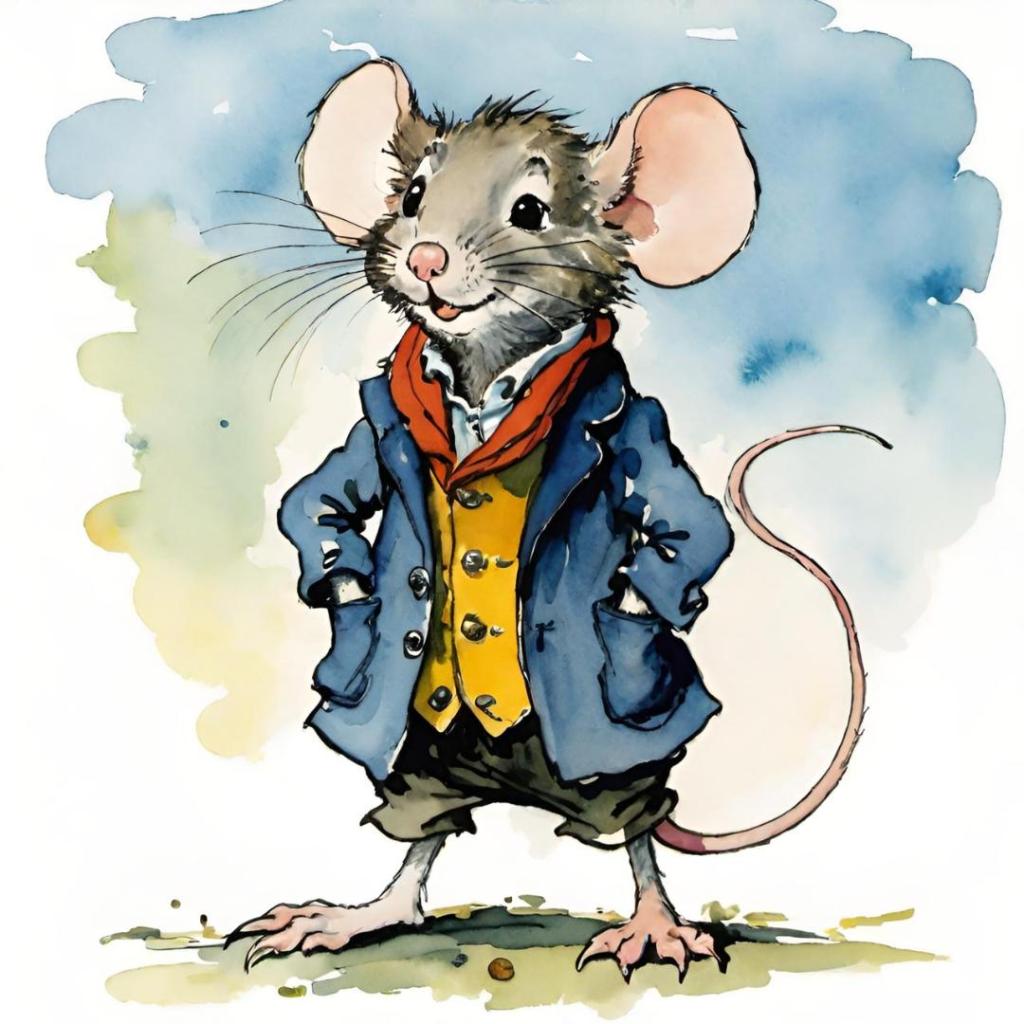
The story begins in 1885, where the Mousekewitzes, a Russian-Jewish mouse family, are receiving gifts for Hannukah. Fievel, the younger child, receives a hat from his father that belonged to the other male mice before him. He then tells him about America and what’s so great about it, such as its freedom. But most importantly, there are no cats, according to them.
However, right after he says that the area is under attack, Cossacks, who were conservative Orthodox Christians that were semi-militarized, invade the village that the mice live in. They also have cats attack the mice. If that’s not bad enough, the Mousekowitz’s home is destroyed by fire.
Later, they are in Hamburg, Germany, where they will immigrate to the US. Papa Mousekowitz and some other mice reflect their past painful experiences, but believe that there are no cats in America, as expressed in a song.
While the Mousekewitzes are boarding a boat that will take them to the United States, Fievel gets excited to see things, such as fish and birds. But he is told to keep walking.
Once on the ship, he gets so excited that he plays and throws his hat outside the boat. But it’s during a storm. Fievel ends up inside a bottle and gets separated from his family.
He arrives in America and is found by a French-accented pigeon named Henri. He gives him advice on how to find his family. Then Fievel is on his way.
He ends up in a weird setting surrounded by strange mice. But he escapes with a mouse called Tony Toponi. They then meet a sweet Irish mouse, Bridget. They are willing to help Fievel find his family.
Meanwhile, though, a mean rat named Warren is planning to terrorize the local mice. He even leads a gang of cats called the Mott Street Maulers.
Will Fievel be able to find his family?
There are many aspects that I enjoyed about this movie. One example is the musical numbers. The ones that appeal to me the most are “There Are No Cats in America” and “Somewhere Out There.” The latter one is beautiful. It’s simultaneously sung by Fievel and his sister, Tanya.
I also admire the characterization, especially between Fievel and his family. It is so sweet. I have the same opinion for Tony and Bridget.
There is also some humor. The best moment of that is when the Mousekowitzes are boarding the boat to America. Fievel is told to keep walking after constantly getting distracted, including by some birds that he points at.
There are also some twists and turns, just like with any movie. A memorable one is when Fievel befriends a cat, Tiger, who shares a lot of things in common with him. I really adored that.
But this film is not without its flaws. A major issue is how the cats who attack the mice at the beginning are portrayed as monstrous beasts. They have sharp teeth, bright eyes, and roar like lions. Maybe the intention was to exaggerate their threats to the mice the way they see them. But it looks strange and unappealing to a viewer like me.
I also wish the villains had more screen time, especially with Fievel. I felt that they weren’t interfering with his goal enough, thus not making it harder for him to achieve. Therefore, there was not enough tension for that.
Although I could follow the story, I found the switching of different POVs to happen too frequently. I understand that having multiple characters’ POVs is often necessary. But if it happens too much, it can make the story harder to understand.
Overall, I enjoyed An American Tail. I think it would make a great family movie and something parents could introduce to their kids as a film they may have grown up with.
I give the movie 4 out of 5 stars.
 Sunayna's Movie Place
Leave a comment