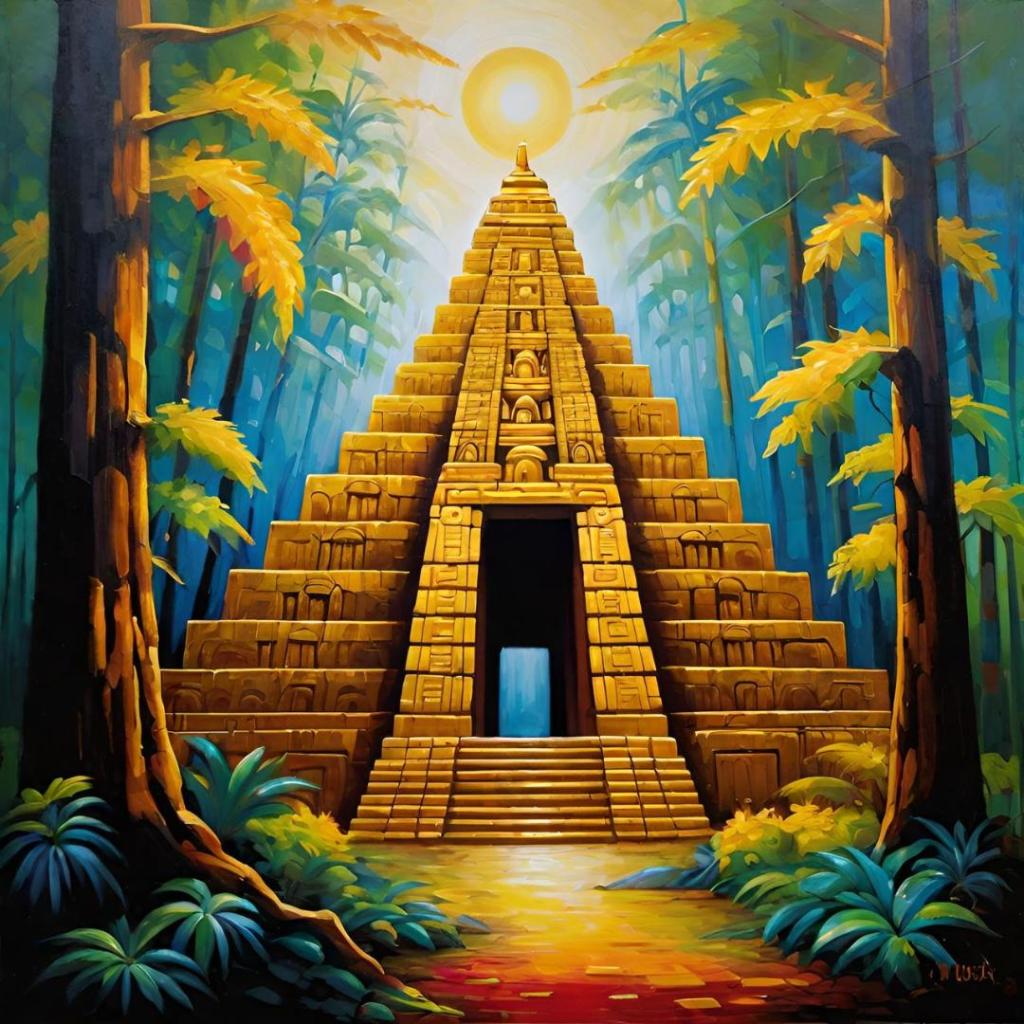
In 1519 Spain, two men, Miguel and Tulio, are playing in a dice contest. They win a map to the legendary city of gold, which is El Dorado. However, when it is revealed that they were using the wrong dice, they get in trouble.
Later, they are on a ship to the New World, but will be sent to Cuba to become slaves. Luckily, they get Cortés’ horse, Altivo, to free them. They then escape on a small boat and reach land.
The men find a totem pole, which suggests that they are in the right place. But not long after, do they see this young native woman, Chel, escape from her people, since their wicked high priest, Tzekel-Kan, is following them.
They meet with Tzekel-Kan and his kind assistant, Chief Tannabok, who assume that they are gods. They then claim that they are. This leads them to having their own luxurious place to stay.
While discussing their plans as faking gods, Chel overhears them, but is willing to keep the fact that they are lying a secret. Tulio starts developing feelings for Chel, as well.
At some point, Tzekel-Kan wants Tulio and Miguel to assist in sacrificing a man, which they refuse. Clueless about the name of the underworld, they request that gold gets thrown there. But once they realize that that wasn’t what they wanted, they receive the remaining gold.
Despite their happiness with the gold, Miguel and Tulio still plan to go back to Spain. They ask Tannabok to build them a boat–only for it to have to take a week. But he is able to shorten that time to three days.
Meanwhile, Tulio spends time with Chel, and Miguel explores the city. At some point, the men are challenged to a game of ball as “gods,” which they struggle for a bit. But with the help of Chel and her armadillo, they win.
However, when Miguel bleeds, Tzekel-Kan figures out that he is not a god since gods don’t bleed. He works on a plan to get rid of them.
I really admire the concept of this movie, where a couple of men, who are somewhat buffoons, pretend to be gods in a different setting. And they act very casual when doing their “jobs.”
Both Miguel and Tulio were silly in different ways. For example, Miguel was more relaxed for the most part.
Another aspect about the characters that stand out to me was how Tulio’s relationship with Chel didn’t become serious. For instance, they didn’t hug or kiss. Rather, their relationship involved more talking and some occasional touch.
Which brings me to my next thought, this movie does have innuendos that are a little more suggestive. There are also a few scenes of brief nudity from the back (which isn’t unusual for family-friendly movies in the 2000s) and even some mildly mature language. The movie is rated PG, but it isn’t too similar to G-rated films, unlike other PG-rated ones from around the time of the film’s release. My personal age range suggestion for this movie would be ages 8 and up.
The movie was produced and distributed by DreamWorks, who also worked on the Shrek films, which has some mature content, too (but most of it likely goes over children’s heads). That might be why it gets a little more mature for the PG-rating.
The film made me laugh at times, although not as much as the Shrek movies. It is also a little bit similar to Disney movies. This is due to the artistic style, tone, storyline style with a few songs (more like 1999’s Tarzan, though, and less like other Disney classics), and personified animal characters, who understand human language perfectly, even if they don’t speak.
And, as with any good movie, it has a lot of twists and turns–more than I predicted.
Overall, I enjoyed The Road to El Dorado. I think it makes a good watch for both families and adults alike. And it’s only an hour and a half long, which should be easy for anyone with a short attention span, as well.
I give this movie 4 out of 5 stars.

 Sunayna's Movie Place
Leave a comment